
Brown spots on your lawn can ruin its appearance, but fixing them is easier once you know the cause. Common culprits include watering issues, pet urine, pests, fungal diseases, compacted soil, or chemical burns. Here’s how to address them:
Prevent future issues with regular watering, mowing, aeration, and soil testing. If problems persist, professional lawn care services (costing $100–$500 per session) can help diagnose and treat underlying issues.

How to Diagnose and Fix Brown Spots in Your Lawn: Step-by-Step Guide
Figuring out what's causing those pesky brown spots in your lawn requires a bit of detective work. Each issue leaves behind specific signs, and pinpointing the cause will help you choose the right fix.
Both underwatering and overwatering can lead to brown spots, but they leave different clues. If your grass feels dry and brittle, and the soil beneath it is also dry, underwatering could be the issue. Most grasses need about 1 to 1.5 inches of water per week to stay healthy. Without enough water, brown patches are almost inevitable.
On the flip side, overwatering creates soggy soil and may even leave standing water. This excess moisture can invite fungal diseases, which often show up as circular patches that look wet or yellow before turning brown. As David Beaulieu from The Spruce points out:
"The soil underneath your grass should be evenly moist: it should be neither soggy nor dry."
Pet urine is a common culprit, especially in yards with dogs. It contains high levels of nitrogen that can "burn" the grass, creating circular brown spots surrounded by a dark green ring. The center dies off, while the edges get an overload of nutrients. If your dog uses the same spot repeatedly, the damage can become severe.
Chemical burns from fertilizers or herbicides can look similar but often appear in streaks or irregular patterns that follow the application path. Over-fertilizing can have the same effect, so if brown spots crop up shortly after applying lawn chemicals, they might be to blame.
Fungal diseases typically cause circular patches, sometimes forming patterns like a "doughnut" or "frog-eye", where the center recovers while the edges remain brown. You might also notice tan spots with dark brown or purple borders on individual grass blades.
For warm-season grasses, try the "tug test." Gently pull on discolored blades near the soil. If they come away easily along with rotted leaf sheaths, a fungal infection could be the problem. In the early morning, you might even spot gray or white "smoky" edges or fine, cobweb-like threads.
"Infected warm-season grasses rarely have leaf spots but instead have rotted leaf sheaths... it is diagnostic for the disease if one tugs gently on the leaves in the recently discolored perimeter and the blades pull free."
– Clemson University Home & Garden Information Center
Grubs are another potential cause. These pests eat grass roots, leaving the lawn feeling spongy underfoot. To test for grubs, try the "carpet test." If the brown turf rolls up like a rug or comes away in clumps with little resistance, grubs might be at work. An increase in birds, moles, or wasps in the area could also indicate they're feeding on the larvae beneath your grass.
Compacted soil can choke out your lawn by preventing water, air, and nutrients from reaching the roots. A simple way to check is the screwdriver test: push a long screwdriver about 6 inches into the soil. If it doesn't go in easily, your soil may need aeration. You might also notice water pooling on the surface or running off without soaking in.
Thatch buildup is another common issue. This layer of organic material between the grass and soil can block water from reaching the roots. A thin layer (under 0.5 inch) is normal, but anything thicker can cause problems. Gardening expert Kristi Waterworth explains:
"A thatch layer of more than a half inch (1 cm.) is trouble brewing. This much thatch acts like a sponge, soaking up any water that would normally go to roots and holding onto it tightly."
To check for thatch, examine a cross-section of your turf. If the layer is thicker than 0.5 inch, dethatching might be necessary. In severe cases, grass roots may start growing into the thatch instead of the soil, leaving them prone to drying out quickly.
Once you’ve figured out what’s causing the brown spots in your lawn, you can take specific steps to repair the damage. The solution depends on the problem, but most brown spots can be fixed with the right approach.
Start by checking your soil’s moisture levels. Use a probe to see if the roots are reaching 6 inches deep. Then, water until the soil is moist to that depth. For clay soil, this usually takes 1 to 1.5 inches of water, while sandy soil might need only about 0.5 inch. If you’re caring for high-maintenance grasses like bluegrass, you may need as much as 2.25 inches of water per week during hot, dry, or windy conditions.
Adjust your watering schedule to 2–3 times a week, preferably in the early morning. Aim for a total of 1 to 1.5 inches of water weekly. Early watering ensures the grass blades dry during the day, reducing the risk of fungal diseases. For clay soils or sloped areas, try the cycle-and-soak method - water in short bursts with breaks in between to allow for proper absorption.
Also, make sure your sprinklers are providing even coverage across your lawn to avoid dry patches.
Next, let’s tackle damage caused by pet urine or chemicals.
If pet urine is the issue, act fast. Flush the area with water immediately to dilute the nitrogen before it burns the grass. Landscaping expert David Beaulieu advises:
"The water will dilute the urine and minimize its impact".
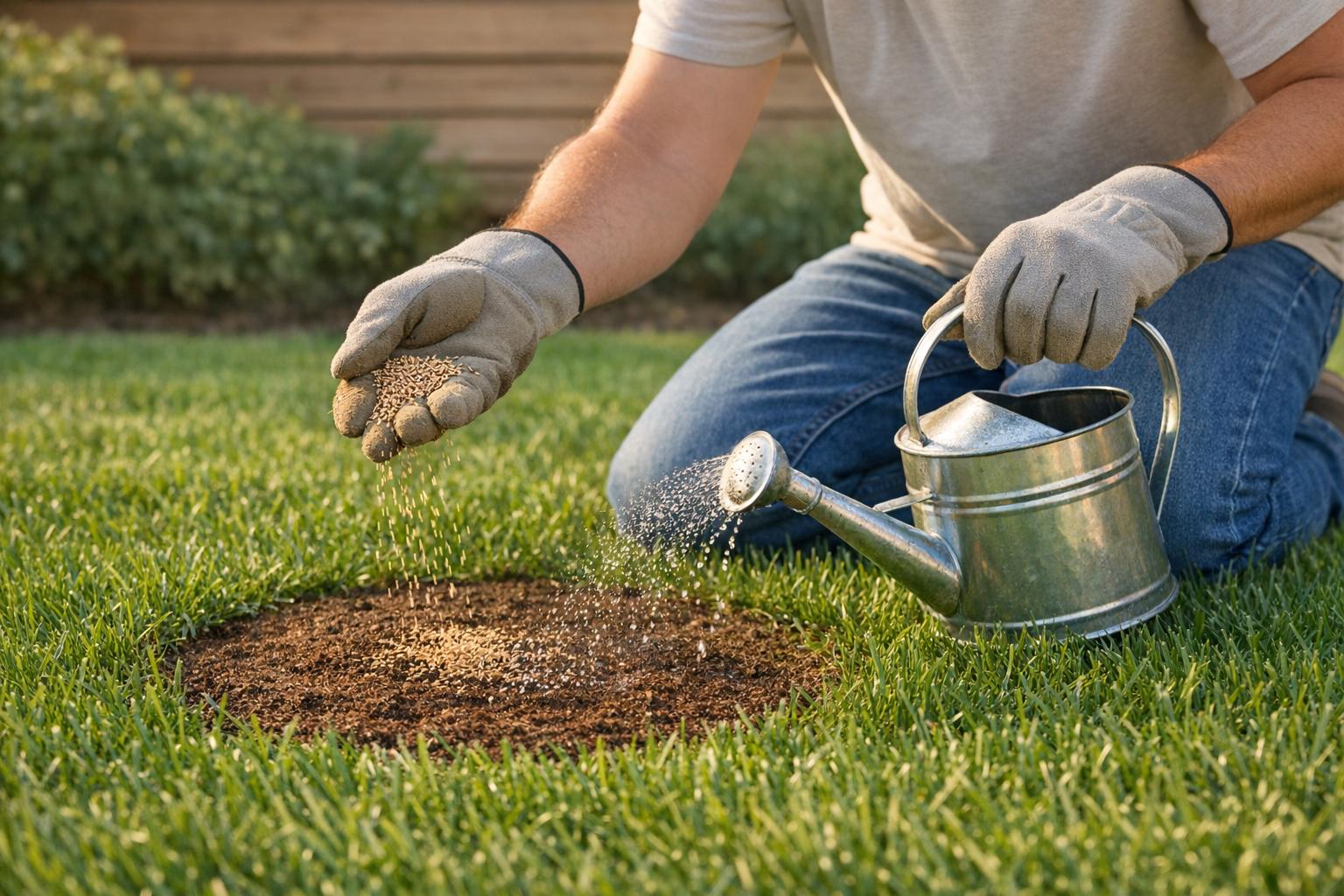
If the grass has already died, rake away the brown debris to expose the soil. Flush the area thoroughly to wash away excess nitrogen or salts. Then, use a lawn repair product designed to neutralize urine damage, followed by reseeding with a matching grass seed or patch-and-repair mix. Keep the area moist until the new grass is well-established.
For fertilizer burns, remove any leftover pellets and soak the area generously with water to flush out salts. If herbicides were accidentally applied, rinse the area immediately and wait for the chemical to break down before reseeding. Small spots, about the size of a fist, may recover naturally after the soil is flushed.
To prevent future issues, train pets to use a non-grass area, like gravel or mulch. Keep a hose handy to rinse spots right after your pet urinates. When using fertilizer, fill spreaders on hard surfaces like driveways to avoid spills, and choose slow-release formulas to minimize the risk of burns.
For fungal diseases, focus on prevention first. Water only in the early morning (between 2 AM and 8 AM) so grass blades have time to dry during the day. Fungal problems spread quickly if grass stays wet for more than 10 hours.
Mow your lawn more often to improve airflow, but avoid cutting off more than one-third of the grass blade at a time. Skip high-nitrogen, fast-release fertilizers during hot, humid weather, as they can make grass more prone to fungal infections. Rake out any dead or matted grass from brown spots to help the soil breathe before reseeding.
If fungicides are needed, products with Azoxystrobin can be effective for up to 28 days. The University of California’s Integrated Pest Management program notes:
"Maintaining a healthy, vigorously growing lawn is the best way to prevent a severe disease outbreak in turfgrass".
To avoid resistance, rotate between fungicides with different active ingredients if you need to apply them repeatedly.
For grub infestations, check by raking the affected area. If the grass pulls up easily without roots, grubs might be the culprit. Use grub control products in the spring to target larvae and prevent future infestations. Natural options like beneficial nematodes or neem oil can also help manage pests without synthetic chemicals.
Lastly, let’s address soil issues to give your lawn a better foundation.
Compacted soil can suffocate your grass by blocking water, air, and nutrients from reaching the roots. Aerate your lawn using a core aerator, which removes small plugs of soil rather than just poking holes. This creates channels for root growth and improves drainage. Aeration is best done in early spring or fall when grass is actively growing and can recover quickly.
If thatch buildup exceeds 0.5 inch, use a dethatching rake or a power dethatcher to remove the excess layer. Thatch can act like a sponge, absorbing water before it reaches the roots. After dethatching, spread a thin layer of compost to enrich the soil and help with recovery.
Once you’ve aerated or dethatched, water the area thoroughly and consider overseeding with a grass variety suited to your local climate. With better soil conditions and fresh seed, your lawn’s brown spots should start to fill in within a few weeks, bringing your yard back to life.
Once you've addressed existing brown spots, the next step is keeping them from coming back. This means committing to regular lawn care practices that promote a healthy, resilient yard. Start by mowing weekly during the growing season, but don’t cut off more than one-third of the grass blade at a time - this helps reduce stress on your lawn. Keep your mower blades sharp by using a metal file or bench grinder. Dull blades can tear the grass instead of cutting it cleanly, leaving the tips to dry out and making your lawn more vulnerable to disease.
Water your lawn deeply but infrequently - aim for 2 to 3 times a week, delivering about 1 to 1.5 inches of water total. Early morning watering is best because it allows the grass to dry quickly, reducing the risk of fungal issues. To ensure even watering, try a simple "catch can test": place empty tuna cans around your yard and run your sprinklers for 15 minutes. This will show you if water is being evenly distributed.
Fertilizing correctly is also crucial. Use soil test results to guide your fertilizer choices, avoiding both nutrient deficiencies and the risk of fertilizer burn. A healthy lawn generally needs 4 to 6 pounds of actual nitrogen per 1,000 square feet each year, but never apply more than 1 pound at a time. Over-fertilizing can lead to lush, overly tender growth that’s more likely to attract fungal infections. As the UC Statewide IPM Program notes:
"Maintaining a healthy, vigorously growing lawn is the best way to prevent a severe disease outbreak in turfgrass".
To keep your lawn in top shape, aerate it annually - either in spring or fall for cool-season grasses. Aeration relieves soil compaction and improves drainage, helping oxygen and nutrients reach the roots more effectively. If thatch buildup exceeds half an inch, remove it with a dethatching rake or a power dethatcher. Thatch can block water and nutrients from penetrating the soil and create a haven for pests.
Testing your soil every 2 to 3 years is another smart move. This helps you monitor pH and nutrient levels, so you can fertilize accurately instead of relying on guesswork. Additionally, consider grasscycling - leaving grass clippings on the lawn after mowing. This simple practice recycles nutrients back into the soil without contributing to thatch buildup.
Aligning your lawn care with the seasons can make a big difference in its health and appearance. In spring, use grub control products to stop larvae from damaging roots later in the year.
During the summer, raise your mower’s cutting height slightly and mow more often. This improves airflow and helps combat fungal diseases, which tend to thrive in hot, humid conditions. In fall, overseed any bare patches with disease-resistant grass varieties. This not only thickens your lawn but also makes it harder for weeds and diseases to gain a foothold. For warm-season grasses like Centipede, Zoysia, or St. Augustine, apply preventative fungicides in early October and again 2 to 4 weeks later to protect against Large Patch disease.
Be mindful of your fertilizer choices based on the season. For cool-season grasses, avoid high-nitrogen fertilizers in late spring and summer. Similarly, for warm-season grasses, skip these fertilizers in mid-to-late fall. As Clemson University's Home & Garden Information Center explains:
"The disease-causing fungus readily attacks the lush growth of grass, which nitrogen promotes".
If you have pets, you’ll need to take extra steps to keep your lawn healthy. Train your pets to use a designated bathroom area, like a gravel patch or mulch zone, to minimize damage to the main lawn. Christopher Roderick, Director of Systems at The Grounds Guys, recommends:
"You could [also] consider having a space where they can be confined so that it isn't apparent in the whole lawn".
For areas where pets frequently go, flush the spots with water immediately after use to dilute the nitrogen. If larger areas are damaged, products like Scotts EZ Seed Dog Spot Repair Sun and Shade ($19.49) can help. These are designed to neutralize high salt and nitrogen levels before reseeding with durable grass varieties. When dealing with pests like grubs, opt for natural insecticides like neem oil or milky spore to keep your lawn safe for pets.

Dealing with stubborn brown spots on your lawn? Sometimes, it takes a professional touch to get to the root of the problem. Bourne Brothers Landscaping provides a full range of lawn care services, including weed control, seasonal cleanups, and routine maintenance to keep your grass looking lush throughout the year. If those brown patches persist, their team can diagnose whether the issue stems from fungal diseases, pest infestations, or other environmental factors. These efforts lay the groundwork for improving your soil and overall landscape.
When brown spots are caused by compacted soil, excessive thatch, or nutrient imbalances, Bourne Brothers Landscaping has the expertise to tackle these issues head-on. Their aeration services help loosen compacted soil - particularly in areas with heavy foot traffic - allowing water, air, and nutrients to reach the roots. If thatch buildup exceeds 0.5 inches, their dethatching services remove the excess material, giving your lawn room to breathe. They also perform soil testing to fine-tune pH levels with lime or sulfur (ideal pH: 6.0–7.0), ensuring your grass gets the nutrients it needs without the risk of over-fertilization. On average, professional lawn care services cost about $300 per session, though prices typically range from $100 to $500.
For more complex lawn challenges, Bourne Brothers Landscaping offers custom solutions tailored to your needs. Whether you're looking to create pet-friendly spaces with designated bathroom areas or need a complete landscape redesign to improve drainage and airflow, their team can craft a plan that works for you. They also specialize in overseeding bare patches with disease-resistant grass varieties and can incorporate hardscape elements to reduce wear and tear on your lawn. With their expert diagnostic skills, they ensure your lawn receives exactly what it needs to thrive and look its best.
Brown spots on your lawn are usually temporary, but tackling them starts with figuring out the root cause. As lawn care expert Gene Barrow wisely states, "Identifying the cause of brown spots is the first step to fixing them". For instance, using fungicide won’t solve a grub infestation, and overseeding won’t help if compacted soil is suffocating your grass. Each problem calls for a specific solution - whether that’s flushing pet urine with water, aerating compacted soil, or applying the right fungicide for a fungal issue.
Once you identify the problem, the fix is straightforward. Remove dead grass, reseed the bare areas, and use treatments tailored to your lawn’s needs. Consistent care, like watering 1 to 1.5 inches per week, keeping mower blades sharp, and aerating annually, helps create a thick, healthy lawn that can naturally fend off pests, diseases, and stress.
Preventing problems is always easier than fixing them. A well-maintained lawn - with proper watering, mowing, and occasional soil testing - can save you both time and money down the road. If brown spots do pop up, you’ll be ready to address them before they spread. And for persistent issues, calling in a professional can be a smart move. Lawn care services typically range from $100 to $500 per visit, depending on the problem. By following these steps and staying proactive, your lawn can bounce back to its lush, green glory.
If you notice brown patches on your lawn, the first thing you’ll want to do is figure out what’s causing them. The usual suspects? Fungal diseases, pests, pet urine, or watering problems. Take a close look at the affected areas - check for signs of pests or any unusual growth patterns that might give you a clue.
It’s also worth reviewing your watering habits. Lawns do best with deep but infrequent watering, which helps prevent drought stress and keeps the roots healthy. Don’t forget about the soil itself. Compacted soil or off-balance pH levels could be part of the problem. A soil test and some aeration might be just what your lawn needs to bounce back.
Act quickly to tackle the issue before it spreads. With the right care, you can bring back that lush, green look and keep your lawn thriving.
To determine whether pests or diseases are causing those brown spots on your lawn, take a closer look at the affected areas. Pest damage, like that caused by grubs, often results in soft, spongy patches of grass that lift easily, exposing larvae or insects beneath. On the other hand, fungal diseases, such as brown patch, usually show up as circular or irregular brown areas that appear sunken. In the early morning, particularly during warm and humid conditions, you might spot white, web-like fungal growth (known as mycelium).
Pay attention to the timing and weather conditions as well. Fungal issues tend to thrive in the summer when heat and humidity are high, while pest-related damage often appears as isolated patches with clear signs of insect activity. Noticing these clues can guide you in pinpointing the issue and selecting the right treatment to bring your lawn back to life.
To keep your lawn looking lush and free of brown spots, consistent care is key. Start by watering deeply but less often. This approach helps grass develop strong roots and withstand stress better. It's also a good idea to test your soil to figure out what nutrients it needs. Apply fertilizer based on the results, but avoid overdoing it - too much fertilizer can invite fungal problems.
Another important step is to aerate your lawn every so often. Aeration improves the flow of air, water, and nutrients, helping to prevent soil compaction and making it harder for pests and diseases to take hold.
Don't forget to mow at the right height to reduce stress on the grass, and clear away any excess thatch to lower the chance of fungal growth. By sticking to these practices, you'll set the stage for a vibrant, healthy lawn while keeping those pesky brown spots at bay.

1820 Northwind Dr, Clarksville, TN 37042, United States

Office hours: Mon - Fri: 8:00am - 6:00pm Sat: 10:00am - 2:00pm. On emergency call 24/7.
.png)
SERVICES
Landscape DesignAll Tree ServicesTree MaintenanceTree TrimmingTree RemovalTree PruningStump RemovalPaver PatiosFire Pits© 2026 Bourne Bothers Landscaping
.png)

.png)

.png)


