
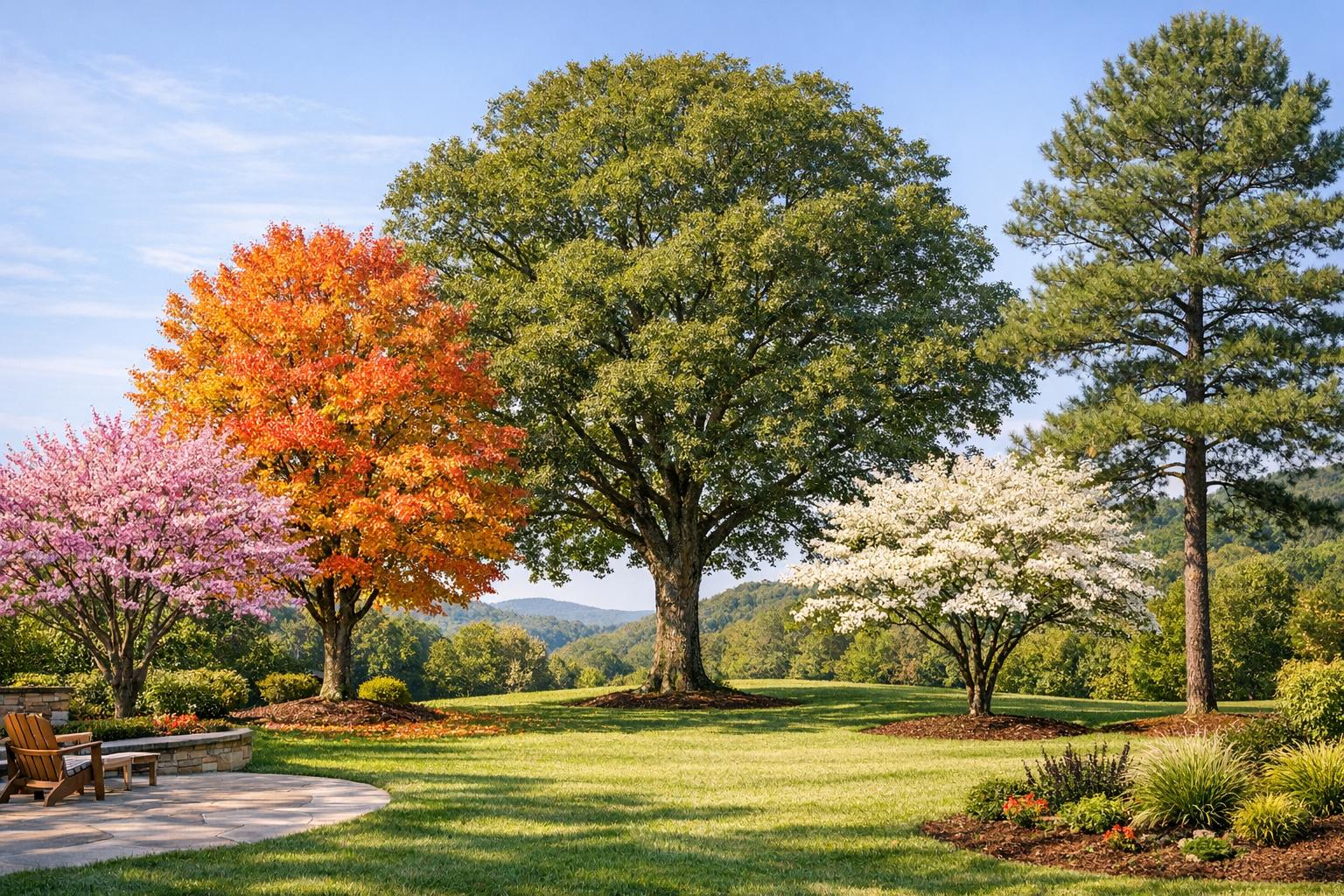
Tennessee’s climate and soil diversity make it an excellent place to grow trees, but selecting the right species is key to long-term success. Factors like USDA hardiness zones, soil type, sunlight, and mature tree size should guide your decision. This article highlights five trees ideal for Tennessee yards:
Each tree has unique characteristics and care needs. For example, Red Maple and Sugar Maple are excellent for shade, while Bald Cypress thrives in wet conditions. Sycamore works well in expansive areas, and Crape Myrtle adds color to compact spaces.
| Tree | Mature Height | Growth Rate | Best Features | Ideal Conditions |
|---|---|---|---|---|
| Red Maple | 60–65 ft | Fast | Vibrant fall color, year-round interest | Moist to wet soil, full sun to partial shade |
| Sugar Maple | 80–115 ft | Moderate | Dense shade, autumn foliage | Well-drained, slightly alkaline soil |
| Bald Cypress | 50–70 ft | Medium | Handles wet soil, unique roots | Wet or dry soil, full sun |
| Sycamore | 70–100 ft | Fast | Striking bark, large shade canopy | Full sun, moist to well-drained soil |
| Crape Myrtle | 20 ft | Fast | Summer blooms, compact size | Full sun, well-drained soil |
When planning your yard, consider the tree’s mature size, soil compatibility, and sunlight needs to ensure healthy growth and minimal maintenance. Whether you’re looking for shade, seasonal color, or a statement tree, these species are excellent choices for Tennessee landscapes.

Tennessee Tree Comparison: Height, Growth Rate, and Best Features
Tennessee’s unique climate, marked by plentiful rain and late-season dry spells, plays a big role in determining which trees will flourish. To make the right choice, start by evaluating your yard’s soil, sunlight, and moisture levels. These factors are key to helping your trees thrive.
Soil type matters. Tennessee yards often feature clay, loam, or shallow limestone soils, each with different drainage properties. For instance, trees like American Beech and White Ash thrive in well-drained soil, while Bald Cypress and Green Ash prefer wetter conditions. A simple soil test can reveal the pH levels and nutrient deficiencies, helping you avoid costly mistakes and giving your tree the best possible start.
"Matching the tree to the site benefits both the tree and the homeowner." - Tennessee Urban Forestry Council
Plan for the tree’s mature size to avoid future problems. Large trees often need at least 30 feet of space, so check for overhead power lines and nearby buildings before planting. Also, call 811 before digging to locate underground utilities. Keep at least 5 feet away from buried lines and 10 feet from sewer lines. If you’re adding topsoil over an existing tree’s roots, limit it to no more than 3 to 4 inches - too much can cut off oxygen and damage the roots.
Sunlight needs vary by species. Black Oaks and Virginia Pines require full sun, while Sassafras can handle partial shade. For energy savings, consider planting deciduous trees on the south and west sides of your home. They’ll provide shade during Tennessee’s humid summers, helping to cut cooling costs. Newly planted trees need at least 1 inch of water each week for the first two years. Slow, deep watering works best to encourage strong, deep roots.
If you’re in the Clarksville, TN area and want expert advice, Bourne Brothers Landscaping can help you pick the right trees and plan for long-term success in Tennessee’s challenging conditions.
The Red Maple stands out as the most common native tree in eastern North America, according to the U.S. Forest Service. Known for its ability to thrive in a wide range of conditions - from soggy lowlands to dry, elevated areas - this tree is a fantastic option for Tennessee homeowners.
When fully grown, Red Maples typically reach heights of 90 to 120 feet, with some in the southern Appalachians surpassing 135 feet. In terms of growth, they add about 2 feet per year after the first season, while seedlings grow roughly 1 foot in their initial year. However, their shallow root systems, which develop primarily in the top 10 inches of soil, can sometimes cause issues like lifting nearby pavement if planted too close to structures.
Red Maples flourish in a variety of environments, handling full sun to partial shade with ease. They can adapt to different soil types, from well-drained areas to wetter, less ideal spots. Their resilience and ability to withstand dry conditions make them a practical choice. For optimal results, plant them on the south or west side of your home to enjoy summer shade and lower cooling expenses.
This tree delivers visual interest throughout the year. In late winter and early spring, it produces clusters of small red flowers before its leaves emerge, making it one of the earliest bloomers. During summer, its medium-to-dark green foliage, with silvery undersides, creates a lush, striking appearance. Come autumn, the leaves transform into vibrant shades of scarlet, orange, or yellow, with male trees often showcasing the deepest reds. Even in winter, the reddish twigs and large red buds ensure the tree remains visually appealing.
Once established, Red Maples are relatively low-maintenance. It’s best to hold off on pruning for at least three years after planting to allow the roots to establish properly. However, their thin bark is susceptible to damage from lawn equipment, which can increase the risk of heart rot. To minimize mowing challenges and protect surface roots, apply 3 to 4 inches of mulch extending to the tree’s dripline. Young trees should receive at least 1 inch of water weekly during their first two years. One crucial note: Red Maple leaves are highly toxic to horses. Consuming as little as 1.5 pounds can cause serious illness, and 3 pounds can be fatal.
With its quick growth, year-round beauty, and easy care, the Red Maple is an excellent addition to Tennessee landscapes, leading us into the next tree on our list.
The Sugar Maple is a favorite choice for Tennessee yards, offering excellent shade and requiring minimal upkeep. While it grows well across much of North America, Tennessee represents the southern edge of its natural habitat, making proper site selection crucial for success.
Sugar Maples grow at a slow to moderate pace, eventually reaching heights of 80–115 feet with a crown spread of about 60 feet in Tennessee. A 10-year-old tree typically measures around 20 feet tall. These trees can live for over 200 years. While they develop deep anchoring roots, their shallow, fibrous roots may interfere with grass growth beneath the canopy. This makes it essential to choose the right spot to plant them.
For optimal growth, plant Sugar Maples in deep, well-drained loam. They can tolerate light clay or sandy soils if there's enough organic matter and consistent moisture. Early fall is the best time to plant them in Tennessee. Be cautious about planting near roads or driveways treated with deicing salt, as these trees are sensitive to it. Heat-tolerant varieties like 'Astis' or 'Caddo' are better suited for Tennessee's warmer climate. These soil and sunlight needs also contribute to their stunning seasonal colors.
Sugar Maples offer beauty throughout the year. In early spring, they produce yellow-green flowers, followed by dense summer foliage that provides excellent shade. Their autumn transformation is spectacular, with leaves turning vibrant shades of yellow, red, and orange - sometimes all at once. Even in winter, the tree's bark, with its long curling strips and jet-black patches near the base, adds visual interest to the landscape.
Wait at least three years after planting before pruning to allow the roots to establish fully. Keep the soil consistently moist during the tree’s early years. If planting near utility lines, maintain a minimum distance of 5 feet from buried lines and 10 feet from sewer lines. The tree’s dense shade and shallow roots can make it difficult for grass to thrive underneath; consider using alternative ground covers. While mature Sugar Maples can handle short droughts, they thrive best with regular watering.
The Bald Cypress is a standout choice for Tennessee yards with poor drainage or areas prone to flooding. It thrives in moist and variable conditions, making it a resilient addition to many landscapes.
Bald Cypress trees typically grow to heights of 60 to 70 feet, with a spread of 20 to 30 feet. Under ideal conditions, they can even reach up to 120 feet. Young trees grow at a steady pace of 1 to 2 feet per year, and mature trees develop thick trunks, ranging from 3 to 7 feet in diameter. Some specimens in the Southeast are over 2,600 years old, showcasing their impressive lifespan. To avoid potential issues with roots, plant your tree at a distance equal to its mature height from structures.
Bald Cypress is surprisingly versatile when it comes to soil. It performs well in clay, loam, and sandy soils, and while it thrives in wet, acidic conditions - even standing water - it can handle drought once established. It needs full sun, receiving at least six hours of direct light daily, but it can manage partial shade. In Tennessee's limestone-rich areas, the tree may experience needle yellowing due to alkaline soil. Adding soil amendments can help maintain the acidity it prefers. Its ability to tolerate air pollution and compacted soils makes it an excellent choice for urban areas, including cities like Nashville. These traits, combined with its adaptability, make it a reliable and visually striking option for diverse landscapes.
The Bald Cypress offers year-round beauty. In spring, its feathery new growth emerges in a soft yellow-green hue, deepening to sage green during summer. Come fall, its needles transform into warm shades of bronze and red before shedding entirely. As a deciduous conifer, it reveals a dramatic winter silhouette with peeling reddish-brown to silvery-gray bark. Older trees often develop a flared base and unique "knees" - knobby root structures that add character, especially in wet environments.
Caring for a Bald Cypress is relatively simple. Be cautious when mowing near its base to avoid damaging its "knees". Its small needles and branchlets decompose quickly, making fall cleanup easy. During the first one to three months, ensure seedlings are kept in moist or saturated soil to help them establish. Additionally, follow utility clearance guidelines when planting. Beyond its low-maintenance nature, the Bald Cypress provides essential habitat and food for wildlife like wood ducks, squirrels, and songbirds.
The American Sycamore is a towering native of Tennessee, known for its rapid growth and ability to provide ample shade. However, it thrives best in large, open spaces, making it an excellent choice for expansive yards, parks, or wide-open areas.
American Sycamores can grow to impressive heights, typically reaching 75 to 100 feet, and under ideal conditions, sometimes stretching up to 131 feet. Their trunks are equally remarkable, often exceeding 10 feet in diameter. These trees grow quickly, adding about 2 feet annually, and some can gain as much as 3–4 feet per year. With lifespans ranging from 200 to 600 years, they’re a long-term commitment. Due to their massive size, sycamores need at least 60 feet of space, making them unsuitable for smaller suburban lots but perfect for larger properties or open landscapes.
Sycamores thrive in full sun, requiring at least six hours of direct sunlight daily. They adapt well to different soil types, including clay, loam, and sand, and can handle a wide pH range from acidic to alkaline. While they prefer moist, well-drained soils and are commonly found near streams or wetlands, mature sycamores are surprisingly drought-tolerant. They’re also resilient in urban environments, tolerating pollution and occasional flooding. To avoid potential issues, plant your sycamore at a distance from structures equal to its expected height.
One of the sycamore’s standout features is its distinctive “camouflage” bark. The reddish-brown outer bark flakes off, revealing creamy white patches underneath, creating a striking visual during winter when most trees are bare. In spring, it produces greenish-yellow male flowers and red female flowers. By summer, its large, lobed leaves provide dense, cooling shade. Come fall, the foliage transforms into warm hues of yellow, gold, and brown, while the tree produces fuzzy, round seed balls - or “buttonballs.” These serve as a food source for birds like the American Goldfinch and Purple Finch, adding ecological value to its beauty.
While the sycamore is undeniably stunning, it does require some upkeep. It’s known for shedding twigs, large leaves, and fruit clusters, which can create a bit of mess. Additionally, sycamores are prone to anthracnose, a fungal disease, though affected trees usually recover and regrow leaves by mid-summer. Pruning should be avoided for the first three years after planting. Over time, mature sycamores often develop hollow trunks, which provide important nesting spots for wildlife such as wood ducks, owls, and bats, adding another layer of ecological importance to this majestic tree.
The Crape Myrtle is a standout addition to Tennessee's landscape, offering vibrant seasonal beauty and versatility for yards of all sizes.
Crape Myrtles are a wonderful choice for year-round interest. Unlike larger trees, these adaptable plants come in a variety of sizes, from compact shrubs around 8 feet tall to majestic trees reaching up to 30 feet. This makes them a great fit whether you have a cozy backyard or a more expansive space.
Crape Myrtles grow steadily, adding 1–2 feet per year. Their mature size varies by cultivar. For smaller spaces, semi-dwarf options like 'Tonto' grow to 8–15 feet tall and 6–10 feet wide, ideal for tight spots or as accents near your home. Mid-range varieties, such as 'Arapaho,' grow to about 20 feet, while larger types like 'Natchez' and 'Muskogee' can reach impressive heights of 25–30 feet with spreads of 15–25 feet. The Black Diamond series offers a unique option, growing to 10–12 feet with striking black foliage that adds a bold visual element.
Crape Myrtles thrive with at least 6 hours of direct sunlight daily. Without enough sun, blooms will be sparse and underwhelming. They prefer well-drained soil and should be planted in areas that avoid waterlogging. While they are very drought-tolerant once established, newly planted Crape Myrtles need consistent watering - every 2–3 days for the first 3–4 months - to develop strong roots. Proper care during this period ensures healthy growth and vibrant blooms.
Crape Myrtles bring something special to every season. In summer, they showcase clusters of flowers in colors like white, pink, red, coral, or fuchsia. Cultivars such as 'Arapaho' and 'Red Rocket' can bloom for over 120 days. As fall arrives, their foliage turns brilliant shades of orange, crimson, maroon, or bronze-red. In winter, the tree's exfoliating bark - ranging in tones like cinnamon brown or light gray - creates a striking visual. The Black Diamond series adds even more drama with its dark burgundy to black leaves, contrasting beautifully against its bright blooms.
Proper pruning is key to keeping Crape Myrtles healthy and attractive. Prune in late winter while the tree is dormant, but avoid the common mistake of severe topping, often called "crape murder", which damages the tree’s natural shape and produces weak growth. Instead, use thinning cuts to maintain its elegant form. For a single-trunk look, remove "sucker" shoots at the base as they appear. To minimize issues like powdery mildew, plant in full sun with good air circulation and opt for mildew-resistant varieties like 'Natchez,' 'Sioux,' 'Tonto,' or 'Tuscarora.' While aphids can cause sooty mold, this is mainly a cosmetic issue and can be easily managed with soapy water or horticultural oils.
Here's a handy table to compare key features of five popular trees for Tennessee yards. Use this quick reference to find the tree that best suits your yard's conditions.
| Tree | Mature Height | Mature Spread | Growth Rate | Soil and Sun Needs | Water Tolerance | Maintenance Level | Best Yard Uses |
|---|---|---|---|---|---|---|---|
| Red Maple | 60–65 ft | 40 ft | Fast | Slightly acidic; moist to wet soil; full sun to partial shade | High | Low | Shade tree with vibrant fall color |
| Sugar Maple | 80+ ft | 60 ft | Fast (first 10 years) | Slightly alkaline; moist soil; full sun | Moderate | Low | Large shade tree with classic fall foliage |
| Bald Cypress | 50–70 ft | 30 ft | Medium (13–24 in/year) | Full sun; adaptable to both wet and dry soils | Very high | Low | Statement tree ideal for wet areas |
| Sycamore | 70–100 ft | 50 ft | Fast (2 ft/year) | Full sun; slightly alkaline; tolerates both wet and drought conditions | Very high | Moderate | Great for large yards needing rapid shade and unique bark |
| Crape Myrtle | 20 ft | 10 ft | Fast | Full sun; well-drained soil | Low | Moderate | Perfect for small yards; offers summer blooms |
If your yard has wet or poorly drained soil, Bald Cypress is a standout choice. For vibrant fall colors, Red Maple or Sugar Maple are excellent options, but keep soil pH in mind - Red Maple thrives in slightly acidic soils, while Sugar Maple and Sycamore prefer slightly alkaline conditions.
Choosing the right trees for Tennessee's diverse conditions means considering species that thrive in your specific local climate. As highlighted by the University of Tennessee Agricultural Extension Service, "Diversity in soil types, climate and elevation give Tennessee an environmental gradient that provides habitats for approximately 190 native forest trees and large shrubs".
Start by evaluating your yard's soil, space, and drainage to find a good match. Measure the area carefully, keeping in mind the mature size of the tree - large species like Sycamore need at least 40-60 feet of clearance from structures and utilities. Think about your goals, too: are you looking for summer shade, vibrant fall foliage, or year-round privacy?
Matching the tree to the site doesn’t just ensure healthy growth - it also protects your property. Proper placement minimizes issues like root damage, interference with utilities, and the need for frequent pruning. This approach ties back to the article's core idea: the right tree in the right place benefits both the landscape and the tree itself.
For expert advice tailored to Tennessee's unique zones, reach out to Bourne Brothers Landscaping. Their team can assess your soil, recommend species that align with your goals, and provide specialized care like deep-root fertilization and pest management. Professional planting can even reduce summer temperatures by as much as 15°F.
Whether you're planting a fast-growing Red Maple for quick shade or a majestic Sugar Maple to stand the test of time, your choices reflect the balance of beauty and practicality discussed earlier. Contact Bourne Brothers Landscaping for a custom quote and let their expertise transform your Tennessee yard into a thriving, picturesque landscape.
If you're searching for shade trees that thrive in Tennessee's climate, native oaks are hard to beat. Trees like white oak, Nuttall oak, scarlet oak, and Shumard oak are known for their wide, layered canopies, offering relief from the summer sun while adapting well to the local soil and weather. Another standout option is the willow oak, prized for its slender leaves and impressive drought tolerance.
For larger yards, the Southern magnolia is a stunning choice. This evergreen beauty can reach heights of 60–80 feet, offering year-round shade with its dense, glossy foliage. However, it may require occasional pruning to maintain its shape and prevent it from encroaching on nearby structures.
These trees not only provide much-needed shade but also add visual appeal to your yard, support local wildlife, and thrive in Tennessee's natural conditions.
To choose the perfect tree for your Tennessee yard, start by testing your soil. You'll want to find out its pH level, texture (whether it's sandy, clay, or loamy), and how well it drains. While many trees in Tennessee do best in well-drained, fertile soils, several native species are equipped to handle the heavier or more acidic soil types often found in the state. If your soil tends to hold water, consider moisture-loving trees like river birch or sweetgum. On the other hand, for dry, fast-draining areas, trees like willow oak or black locust are better suited.
After identifying your soil type, match it with the soil preferences of the trees you're considering. Native Tennessee trees are an excellent option because they’re already adapted to the local environment. For instance, the eastern redbud thrives in different soil types but struggles with prolonged drought, while hickories and oaks can tolerate alkaline soils and drier conditions. By aligning the tree’s needs with your soil, you’ll set it up for healthy growth, reduce maintenance, and create a beautiful, lasting addition to your landscape.
The early years after planting are critical for your trees to develop strong, healthy roots. Make sure to water the soil around the tree consistently, keeping it damp but not overly saturated. If your yard doesn’t drain well, you might want to mix in some organic material or plant the tree on a slightly raised area to avoid root rot.
Keep an eye on your trees for any signs of pests or diseases. This is especially important because many native Tennessee trees are vulnerable to specific problems. Catching and addressing these issues early can protect your tree’s growth. When it comes to pruning, only remove dead or damaged branches, and ensure your cuts are clean to minimize the chance of infection.
Over time, drought-tolerant trees become easier to care for, as they need less watering once they’re established. Planting during the dormant season - late fall or early winter - gives your trees a head start, helping them adjust before the intense summer heat sets in. With the right care, your trees will flourish and bring beauty to your yard for years to come.

1820 Northwind Dr, Clarksville, TN 37042, United States

Office hours: Mon - Fri: 8:00am - 6:00pm Sat: 10:00am - 2:00pm. On emergency call 24/7.
.png)
SERVICES
Landscape DesignAll Tree ServicesTree MaintenanceTree TrimmingTree RemovalTree PruningStump RemovalPaver PatiosFire Pits© 2026 Bourne Bothers Landscaping
.png)

.png)

.png)


